100+
Products/month



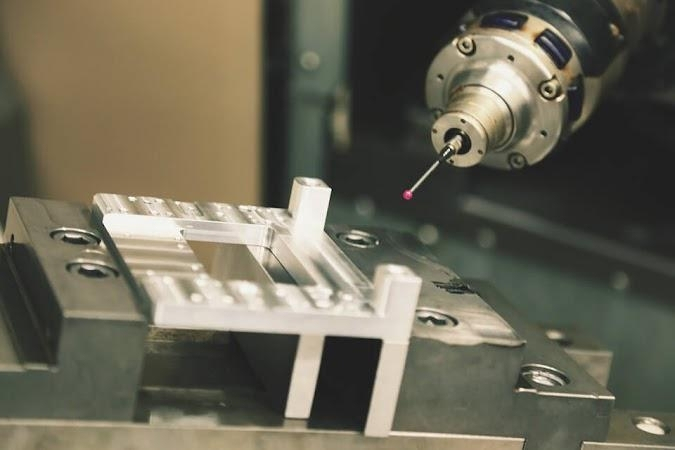
"In the mechanical industry, lathe fixtures play a crucial role in the machining of parts. Known as an indispensable tool, mechanical machining fixtures not only help position and secure workpieces but also ensure the accuracy and quality of the final product. With a variety of designs and functions, lathe fixtures have become an essential part of every mechanical workshop, from small shops to large manufacturing plants."
1. General Overview of Fixtures
1.1. What are Fixtures?
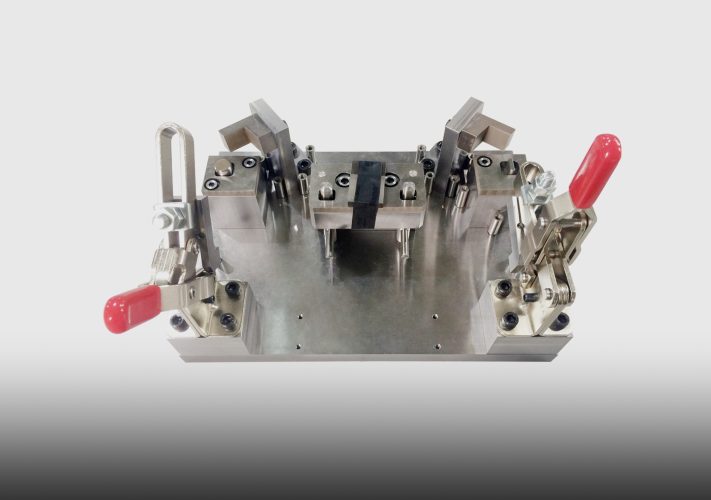
"Fixtures are devices used to fix and position workpieces during mechanical machining. They are a critical component in ensuring product quality."
1.2. Role and Functions of Fixtures
"CNC fixtures have two main functions:"
1.3. Applications of Fixtures
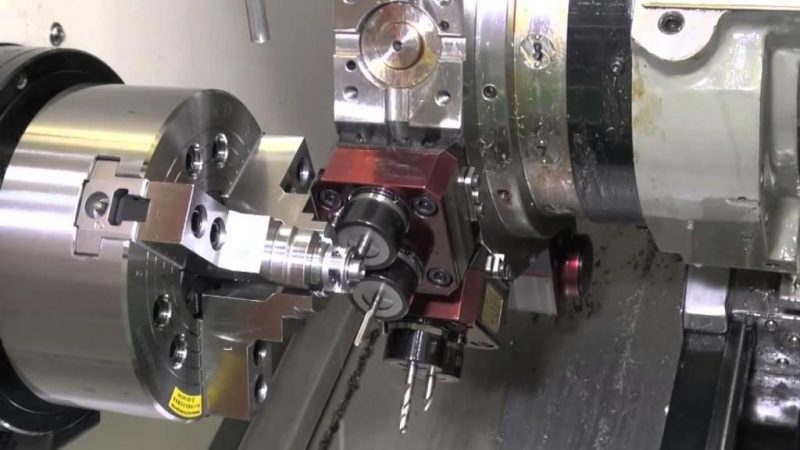
"Machining fixtures in general, and lathe fixtures in particular, play a crucial role in mechanical machining and are widely used in the following areas:"
2. Common Types of Lathe Fixtures Currently in Use
"Below is a list of lathe fixtures commonly used in mechanical machining workshops."
4.1. Rigid Cylindrical Mandrel – Drawbar Clamping
"Rigid cylindrical mandrels are capable of machining the Ø350 diameter of pump impellers. The workpiece is positioned on the mandrel and secured with a nut. The mandrel and workpiece are mounted on two centers and use driving dogs to transmit torque."
4.2. Elastic Mandrel
"Elastic mandrels are used to secure and clamp workpieces. The workpiece is positioned on the elastic mandrel and the flange face of the mandrel body, limiting five degrees of freedom. When tightening the nut, the conical part moves to the left, causing the elastic mandrel to expand and clamp the workpiece. The conical mandrel body is mounted on the lathe spindle and is drawbar clamped from behind the spindle."
4.3. Elastic Collet – Collet Clamping Type
"Elastic collets are used to secure and clamp workpieces along the outer cylindrical surface. The workpiece is positioned in the elastic collet and rests against the end face of the part, limiting five degrees of freedom. When tightening the nut, the elastic collet is compressed and clamps the workpiece."
4.4. Mandrel with Disc Springs
"This mandrel uses disc springs to secure and clamp the workpiece along the inner cylindrical surface. When tightening the screw, the collet deforms the disc springs radially to clamp the workpiece. The body is mounted in the conical hole of the spindle and is clamped with a drawbar at the rear of the spindle."
4.5. Self-Clamping Mandrel with One Roller
"This mandrel is constructed from a roller, washers, set screws, locating pins, and the mandrel body. The roller is ground synchronously with the mandrel body diameter, and the workpiece is clamped by centrifugal cutting force."
4.6. Self-Clamping Mandrel with Three Rollers
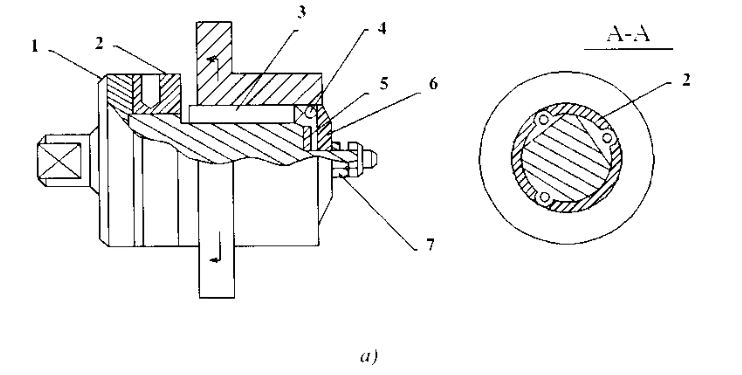
"This mandrel has three rollers spaced 120° apart. The rollers are placed on the mandrel body and can move independently. Before clamping the workpiece, the spacers are rotated to position the rollers at the lowest point. After clamping, the springs push the rollers to wedge the workpiece."
4.7. Face and Hole Turning Fixture
"The workpiece is placed on a circular steady rest and the cylindrical part of the mandrel, limiting five degrees of freedom. Two jaws hold the workpiece firmly. The conical tail of the mandrel is mounted into the conical hole of the spindle and clamped with a drawbar at the rear of the spindle."
4.8. Hole Turning Fixture at the End Face
"The characteristic of this fixture is that the machined hole center does not coincide with the locating hole center. The workpiece is positioned on a circular steady rest, cylindrical pin, and anti-rotation pin, and clamped with two jaws. To balance during machining, counterweights are added."
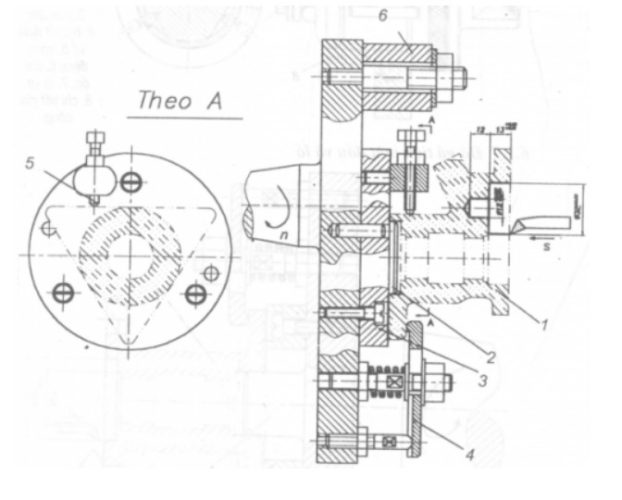
4.9. Concave Spherical Turning Fixture
"When using a concave spherical turning fixture, the workpiece is held on the three-jaw chuck of the lathe. The gear of the fixture engages with the rack, creating a spherical surface with the selected radius."
4.10. Chucks
"Chucks are used to clamp and secure workpieces on the lathe spindle. There are two types of chucks: self-centering and non-self-centering."
4.11. Centers
"Centers are used to hold workpieces with low rigidity or long shafts. There are four types of centers: fixed, rotating, reverse, and knurled."
4.12. Driving Dogs
"Driving dogs are tools to transmit rotational torque to workpieces mounted on two centers. Driving dogs come in two types: straight tail and curved tail."
4.13. Steady Rests (LuyNet)
"Steady rests are used to increase rigidity for long or heavy workpieces. There are two types of steady rests:"
"In the context of increasingly advanced technology, fixture requirements are becoming more stringent, demanding high precision and durability. Aokishintech is proud to be a leading mechanical machining plant specializing in the design, fabrication, and assembly of precision mechanical machining fixtures, lathe fixtures, inspection fixtures, component assembly, etc., with absolute accuracy. We are always ready to provide optimal solutions, helping to improve efficiency and ensure product quality for your business."